
What are the 5 C’s of Recruitment?
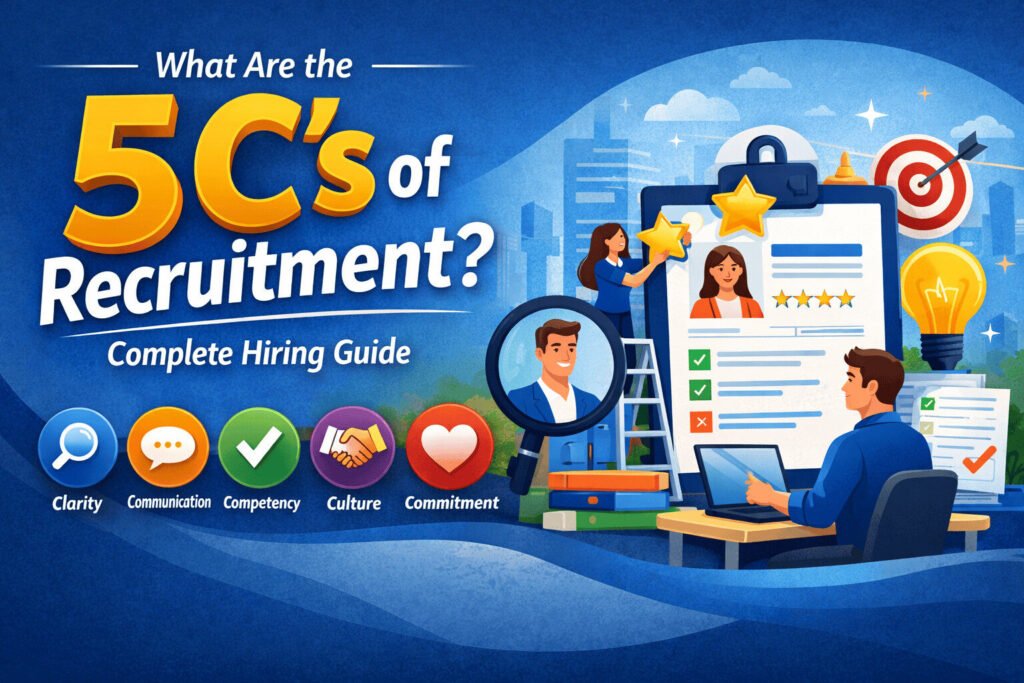
A Complete Guide for Modern Hiring Success Recruitment is no longer just about filling vacancies. In today’s competitive job market, businesses need a strategic hiring process that attracts top talent, improves employee retention, and builds a strong company culture. If you want to streamline your hiring process and improve recruitment outcomes, understanding the 5 C’s of recruitment can make a significant difference. So, what exactly are the 5 C’s of recruitment? They are: In this detailed guide, we will break down each of these 5 C’s, explain why they matter, and show you how to apply them effectively in your recruitment strategy. Why Understanding the 5 C’s of Recruitment Is Important Before diving into each element, let’s understand why the 5 C’s are essential in modern recruitment and talent acquisition. Today’s hiring environment is: Companies that fail to follow a structured recruitment strategy often face: By applying the 5 C’s of recruitment, organizations can: Now, let’s explore each C in detail. 1. Clarity in Recruitment Clarity is the foundation of successful hiring. Without clear job requirements, expectations, and hiring goals, recruitment becomes confusing and ineffective. What Does Clarity Mean in Recruitment? Clarity refers to: Why Clarity Matters When recruiters and hiring managers lack clarity: This leads to poor hiring decisions and increased employee attrition. How to Implement Clarity in Hiring Here are practical ways to ensure clarity: ✔ Write Clear Job Descriptions Include: Use SEO-friendly keywords such as: ✔ Define Hiring Goals Ask: ✔ Align HR and Hiring Managers Both teams must agree on: Clarity reduces confusion and improves recruitment efficiency. 2. Communication in Recruitment Communication is one of the most critical elements in modern talent acquisition. A strong communication strategy improves the candidate experience and strengthens employer branding. What Does Communication Mean in Recruitment? It includes: Why Communication Is Crucial Poor communication can result in: In contrast, effective communication helps: Best Practices for Recruitment Communication ✔ Maintain Timely Responses Candidates appreciate updates. Even a simple message like:“Your application is under review”improves candidate experience. ✔ Set Clear Expectations Inform candidates about: ✔ Provide Feedback Even rejected candidates deserve constructive feedback. This builds a positive employer brand and increases future applications. ✔ Use Technology Smartly Use: Strong communication is the backbone of successful recruitment management. 3. Competency in Recruitment Competency refers to identifying and hiring candidates with the right skills, knowledge, and abilities. What Is Competency-Based Recruitment? It is a hiring approach that evaluates candidates based on: Why Competency Matters Hiring someone based only on a resume can be risky. Competency-based recruitment helps: How to Assess Competency Effectively ✔ Use Structured Interviews Ask behavioral questions like: ✔ Conduct Skill Assessments Use: ✔ Evaluate Soft Skills Don’t ignore: Competency ensures you hire not just a candidate, but the right candidate. 4. Culture in Recruitment Hiring for culture fit is as important as hiring for skills. What Does Culture Mean in Recruitment? Company culture includes: Why Cultural Fit Is Important When employees don’t align with company culture: Hiring candidates who align with company values improves retention and engagement. How to Hire for Cultural Fit ✔ Clearly Define Company Values Examples: ✔ Ask Culture-Based Questions ✔ Involve Team Members Let potential teammates participate in interviews to assess compatibility. However, be careful not to confuse cultural fit with hiring similar personalities. Focus on shared values, not similarities. 5. Commitment in Recruitment Commitment is the final and most powerful C in recruitment. It applies to both employers and employees. Employer Commitment Companies must show commitment by: Candidate Commitment Candidates should demonstrate: Why Commitment Matters Lack of commitment leads to: Strong commitment improves: To assess commitment, ask: Commitment builds long-term recruitment success. How the 5 C’s Improve Your Recruitment Strategy When implemented together, the 5 C’s create a powerful recruitment framework. C Impact on Recruitment Clarity Reduces confusion and wrong hiring Communication Improves candidate experience Competency Ensures high-quality hires Culture Enhances retention Commitment Builds long-term workforce stability Together, they help organizations: Common Recruitment Mistakes to Avoid Even with the 5 C’s, companies sometimes make mistakes such as: Avoiding these mistakes strengthens your hiring process. Final Thoughts: Mastering the 5 C’s of Recruitment Recruitment is both an art and a science. The 5 C’s of recruitment – Clarity, Communication, Competency, Culture, and Commitment – provide a structured, practical framework to hire the right talent efficiently. By focusing on these five essential elements, businesses can: If you want to build a successful recruitment strategy in 2026 and beyond, start implementing the 5 C’s today. Because great companies are built by great people – and great people are hired through great recruitment.
How to Optimize Your Resume for Online Job Applications

In today’s digital hiring landscape, simply creating a good resume is not enough. Most companies use Applicant Tracking Systems (ATS) and online job portals to filter applications before a recruiter even sees them. If your resume is not optimized for online applications, it may never reach the hiring manager. Whether you are a fresher or an experienced professional, optimizing your resume correctly can significantly increase your chances of getting shortlisted. Let’s understand how to do it step by step. 1. Understand How Online Hiring Systems Work Most employers use ATS software to scan resumes for keywords, skills, and job-specific requirements. These systems automatically shortlist candidates whose resumes match the job description. If your resume does not contain the right keywords, it may get rejected-even if you are qualified. Tip: Carefully read the job description and identify repeated words like required skills, tools, certifications, and experience level. 2. Use Relevant Keywords Naturally One of the most important steps in resume optimization is keyword usage. For example: Avoid stuffing keywords unnaturally. Instead, integrate them within your experience and skills sections. ✔ Good Example:“Managed digital marketing campaigns using SEO and Google Ads strategies.” 3. Keep Your Resume ATS-Friendly To make your resume ATS-compatible: Creative resumes may look attractive, but they often fail in online systems. 4. Write a Strong Professional Summary Your summary should clearly explain: Example: “Results-driven marketing professional with 4+ years of experience in digital strategy, SEO optimization, and campaign management. Skilled in improving brand visibility and generating measurable business growth.” Keep it concise but impactful. 5. Customize Your Resume for Every Job Many candidates make the mistake of sending the same resume everywhere. Instead: Customization increases your selection probability dramatically. 6. Quantify Your Achievements Numbers make your resume stronger and more credible. Instead of writing:“Handled sales team.” Write:“Led a sales team of 8 members and increased quarterly revenue by 22%.” Recruiters prefer measurable impact over generic responsibilities. 7. Highlight Skills Clearly Create a dedicated skills section with: For freshers, internships, academic projects, and certifications are highly valuable. 8. Keep It Clear and Concise Ideal resume length: Avoid: Focus on what adds value to the employer 9. Optimize for Job Portals When uploading your resume on job portals: An updated profile ranks higher in recruiter searches. 10. Proofread Before Submitting Small mistakes can create a negative impression. Before applying: A clean and professional resume reflects attention to detail. Final Thoughts Optimizing your resume for online job applications is not about making it fancy-it’s about making it searchable, relevant, and result-focused. With proper keywords, clear formatting, and customized content, your resume can successfully pass ATS filters and reach recruiters. In a competitive job market, smart optimization can be the difference between getting ignored and getting shortlisted. If you need professional guidance to improve your resume or explore better career opportunities, always seek expert advice and stay proactive in your job search.
What Are the Top 5 Future Jobs?
The world of work is changing faster than ever before. Rapid advancements in technology, artificial intelligence, automation, climate awareness, and digital transformation are reshaping industries across the globe. Jobs that were in high demand a decade ago are evolving-or even disappearing-while entirely new career opportunities are emerging. For students, professionals, entrepreneurs, and businesses, understanding future jobs is no longer optional-it is essential for long-term success. Whether you are planning your career, reskilling, or hiring talent, knowing where the future is headed can help you stay ahead of the curve. In this blog, we will explore the top 5 future jobs that are expected to dominate the global job market over the next 10–20 years. These roles are driven by innovation, sustainability, and digital growth, making them some of the most secure and rewarding careers of the future. Why Understanding Future Jobs Is Important Before diving into the top 5 future jobs, let’s understand why future-ready careers matter. According to global employment trends, 65% of today’s students will work in jobs that don’t yet exist. This highlights the importance of preparing for roles that align with future industry needs. 1. Artificial Intelligence (AI) & Machine Learning Specialist Why AI Is a Future-Proof Career Artificial Intelligence is no longer science fiction-it is already part of our daily lives. From chatbots and recommendation systems to self-driving cars and predictive analytics, AI is transforming how businesses operate. AI and Machine Learning specialists design, develop, and improve intelligent systems that can learn from data and make decisions with minimal human intervention. Key Responsibilities Skills Required Industries Hiring AI Specialists Salary & Growth Potential AI specialists are among the highest-paid professionals globally, with demand exceeding supply. Salaries are expected to grow consistently as AI adoption increases. Why This Job Has a Strong Future AI is expected to add trillions of dollars to the global economy. As automation increases, AI specialists will be essential for designing ethical, efficient, and scalable solutions. 2. Data Scientist & Data Analyst The Power of Data in the Future Data is often called the new oil, and data scientists are the ones who refine it. Every digital interaction generates data, and organizations rely on professionals who can turn raw data into meaningful insights. Data scientists and analysts help companies make informed decisions, predict trends, and improve customer experiences. Key Responsibilities Skills Required Industries Hiring Data Professionals Salary & Career Growth Data professionals enjoy strong job security and high salaries. As companies become more data-driven, demand will continue to rise. Why This Job Will Always Be in Demand Every industry depends on data. Even AI systems need data scientists to function effectively, making this role future-proof. 3. Cybersecurity Specialist Why Cybersecurity Is a Critical Future Job As the world becomes more digital, cyber threats are increasing rapidly. Cyberattacks, data breaches, and ransomware attacks are costing businesses billions each year. Cybersecurity specialists protect systems, networks, and sensitive data from digital threats, making them essential in the future workforce. Key Responsibilities Skills Required Industries Hiring Cybersecurity Experts Salary & Job Stability Cybersecurity roles offer high salaries and excellent job stability. There is a global shortage of skilled cybersecurity professionals. Why This Job Has a Long-Term Future As long as digital systems exist, cybersecurity will remain essential. Increased digitalization ensures continuous demand. 4. Renewable Energy Engineer & Sustainability Specialist The Rise of Green Careers Climate change and environmental concerns are shaping the future of work. Governments and businesses are investing heavily in renewable energy and sustainability. Renewable energy engineers design systems that generate power from solar, wind, hydro, and other clean sources, while sustainability specialists help organizations reduce environmental impact. Key Responsibilities Skills Required Industries Hiring Green Professionals Salary & Growth Outlook Green jobs are growing faster than traditional roles. Long-term government policies ensure strong career growth. Why This Job Is the Future Sustainability is no longer optional-it is a necessity. Green careers will dominate future employment trends. 5. Digital Marketing & Growth Specialist Why Digital Marketing Is a Future Career With businesses shifting online, digital marketing has become one of the most in-demand skills globally. Digital marketers help brands grow through SEO, social media, content, paid ads, and analytics. Growth specialists focus on data-driven strategies to scale businesses efficiently. Key Responsibilities Skills Required Industries Hiring Digital Marketers Salary & Career Flexibility Digital marketing offers flexible career paths, freelancing opportunities, and global job access. Why This Job Will Continue to Grow As long as businesses need customers, digital marketing will remain relevant. Skills That Will Matter for All Future Jobs Regardless of profession, the future workforce will value: How to Prepare for Future Jobs Conclusion The future job market will be shaped by technology, sustainability, and digital innovation. The top 5 future jobs-AI specialist, data scientist, cybersecurity expert, renewable energy professional, and digital marketing specialist-offer strong growth, job security, and global opportunities. Preparing today for tomorrow’s careers is the smartest investment you can make.
Write Cover Letters That Get Callbacks
A cover letter is often the first impression you make on a recruiter. While many candidates focus only on their resume, a well-written cover letter can significantly increase your chances of getting a callback. If done right, it shows your personality, highlights your skills, and explains why you are the right fit for the role. In this blog, we’ll explain how to write cover letters that get callbacks-step by step. Why a Cover Letter Is Important A resume lists your qualifications, but a cover letter tells your story. It helps recruiters understand: Many recruiters still read cover letters, especially for professional and creative roles. A strong cover letter can set you apart. Start With a Strong Opening The first few lines matter the most. Avoid generic openings like “I am writing to apply for the position.” Instead: Example:“I’m excited to apply for the Digital Marketing Executive role, bringing 3+ years of experience in SEO and paid ads to help your brand grow online.” Customize for Every Job One common mistake is sending the same cover letter to every company. Recruiters can easily spot this. To customize your cover letter: Customization shows effort and genuine interest. Highlight Relevant Skills and Achievements Don’t repeat your resume word-for-word. Instead, focus on: Use numbers when possible: This builds credibility and grabs attention. Keep It Clear and Simple A good cover letter is: Use short paragraphs and simple language. Avoid long sentences and unnecessary jargon. Show Why You’re a Good Fit Employers want to know how you can add value. Explain: This makes your cover letter more personal and impactful. End With a Confident Closing Close your cover letter politely and confidently. Example:“I would welcome the opportunity to discuss how my skills can contribute to your team. Thank you for your time and consideration.” Add a professional sign-off like:Sincerely or Best regards Final Tips for Cover Letters That Get Callbacks Conclusion Writing cover letters that get callbacks doesn’t have to be complicated. Focus on clarity, relevance, and personalization. A strong cover letter can turn your job application into an interview opportunity. Take the extra few minutes to write it right-it can make all the difference.
What to Do After a Job Rejection: A Complete Career Recovery Guide
If you’re wondering what to do after a job rejection, this guide will help you recover emotionally, improve your job search strategy, and move forward with confidence. Job rejection is one of the most discouraging experiences in any professional journey. You spend hours preparing your resume, researching the company, clearing interviews-and still receive a rejection email. While rejection can feel personal, it is a normal and unavoidable part of the job search process. Even highly successful professionals faced multiple rejections before landing the right opportunity. Accept the Rejection Without Taking It Personally The first and most important step after a job rejection is acceptance. It’s natural to feel disappointed, frustrated, or even self-doubt, but rejection rarely means you were not good enough. Companies reject candidates for many reasons: None of these reflect your value or potential. Successful job seekers treat rejection as feedback, not failure. Allow Yourself Time to Process the Emotion Suppressing emotions after rejection can lead to burnout. Give yourself a short window-one day or two-to feel disappointed. Talk to a friend, journal your thoughts, or simply disconnect for a while. However, avoid staying stuck in negativity. The goal is not to ignore rejection, but to process it and move forward productively. Request Feedback from the Employer (When Possible) One of the smartest things to do after a job rejection is to politely ask for feedback. Not all companies respond, but when they do, the insights can be extremely valuable. You can ask: This feedback helps refine your resume, interview answers, and skill development strategy. Review and Improve Your Resume If you’re facing multiple rejections, your resume might need improvement. Today, most companies use ATS (Applicant Tracking Systems), and resumes not optimized for ATS may never reach recruiters. Ask yourself: Updating your resume with industry keywords, action verbs, and quantified results can significantly increase interview calls. Strengthen Your Interview Skills Sometimes, rejection is not about your resume-but about interview performance. Even skilled professionals struggle to communicate their value effectively. Improve by: Interviewing is a skill, and skills can always be improved. Upskill to Stay Competitive The job market evolves rapidly. After rejection, take time to assess if your skills align with current industry demand. Consider: Upskilling shows recruiters that you are proactive, adaptable, and growth-oriented-qualities employers value highly. Reevaluate Your Job Search Strategy Applying randomly to hundreds of jobs often leads to burnout and rejection. Instead, adopt a targeted job search strategy. Focus on: Quality always beats quantity in job hunting. Strengthen Your LinkedIn Profile and Network LinkedIn plays a major role in modern job searches. After rejection, optimize your profile to attract recruiters. Key improvements include: Many job opportunities come through networking, not job portals. Stay Consistent and Maintain Confidence Rejection can shake confidence, but consistency is key. Every “no” brings you closer to the right “yes.” The job market rewards persistence, preparation, and patience. Daily habits to maintain momentum: Confidence grows when action replaces fear. Remember: Rejection Is Redirection Many professionals later realize that a rejected job would not have been the right fit. Often, rejection protects you from environments where growth, culture, or stability may be lacking. Some of the most successful careers were built after repeated rejections. What matters is how you respond, not how many times you fail. Final Thoughts Job rejection is painful, but it does not define your future. By learning what to do after a job rejection-improving skills, refining strategies, and maintaining confidence-you turn setbacks into stepping stones. Treat every rejection as career feedback, not a career verdict. The right opportunity will come when preparation meets persistence.
10 Signs It’s Time to Quit Your Job
Leaving a job is never an easy decision. Bills, responsibilities, and fear of uncertainty often make us stay longer than we should. But sometimes, your job starts costing you more than it pays mentally, emotionally, and even physically. If you’ve been feeling stuck, exhausted, or unhappy at work, these signs can help you understand whether it’s time to move on. 1. You Dread Going to Work Every Day If the thought of Monday fills you with anxiety or stress, it’s a serious warning sign. Occasional bad days are normal, but constant dread means something is deeply wrong. 2. Your Mental Health Is Suffering Burnout, constant stress, overthinking, or feeling emotionally drained after work should never be ignored. A job should challenge you, not destroy your peace of mind. 3. You Feel Undervalued and Unrecognized When your efforts go unnoticed, promotions are denied without reason, or appreciation is missing, motivation naturally fades. Feeling invisible at work damages confidence over time. 4. There Is No Growth or Learning If you’ve stopped learning new skills or growing professionally, you may be stuck. A good job helps you move forward not stay in the same place for years. 5. Your Work-Life Balance Is Completely Broken Long working hours, work calls during personal time, and no space for family or self-care are strong indicators that the job is unhealthy. 6. You Are Underpaid for the Work You Do If your responsibilities keep increasing but your salary doesn’t, it can lead to frustration and resentment. Fair pay matters. 7. Your Values Don’t Match the Company Culture When your beliefs clash with the company’s ethics or leadership style, work feels uncomfortable. Value mismatch often leads to long-term dissatisfaction. 8. Your Physical Health Is Affected Constant headaches, sleep problems, fatigue, or frequent illness may be your body’s way of saying, “This job is too much.” 9. You Feel Stuck, Not Challenged When work becomes repetitive and boring, motivation drops. If there’s no excitement or challenge left, your career may be asking for a change. 10. You Dream About Quitting All the Time If quitting is always on your mind, it’s not a coincidence. Your inner voice knows when it’s time to move on.
Working Professional? Here’s How to Ask for a Raise the Right Way
Asking for a raise can feel uncomfortable, even when you know you deserve it. Many professionals hesitate, fearing rejection or conflict, but the truth is, negotiating your salary is a normal and expected part of career growth. If you’ve been consistently delivering results, taking on more responsibilities, or exceeding expectations, you have every right to start the conversation. The key lies in how you approach it. In this blog, we’ll break down a simple, professional strategy to help you prepare and confidently ask for a raise – from tracking your achievements to knowing when and how to bring it up. 1. Track Your Wins The foundation of a strong raise request is evidence. Your manager or HR team will respond better to data than to feelings or assumptions. That’s why tracking your wins regularly is crucial. Start by maintaining a record of your achievements – both big and small. Each time you complete a successful project, save the metrics, client feedback, and internal recognition that came with it. Here’s what to include: For example, instead of saying, “I’ve been doing a great job,” you can say, “I implemented a new client onboarding process that reduced setup time by 25% and improved satisfaction scores by 15%.” Numbers speak louder than words. They show that you don’t just complete tasks – you create measurable impact. Tip: Keep a “career highlights” document and update it monthly. When the time comes to discuss compensation, you’ll have a clear, data-backed story ready to share. 2. Benchmark Your Salary Before walking into a salary discussion, know your market value. Too many professionals skip this step and end up either undervaluing themselves or asking for unrealistic figures. Start by researching salary benchmarks for your role, experience level, and location. There are several reliable sources for this: When comparing, take into account: Once you have this information, determine a reasonable range rather than a fixed number. For example, instead of demanding ₹80,000 per month, frame it as “Based on industry standards and my recent contributions, I believe a range between ₹75,000–₹85,000 per month would be appropriate.” This approach shows that you’ve done your homework and are open to discussion – both signs of professionalism. Tip: Remember that compensation isn’t only about salary. Consider the full package: bonuses, flexible work arrangements, benefits, and growth opportunities. Sometimes, you can negotiate these if an immediate salary increase isn’t possible. 3. Time It Right Even the best case can fall flat if your timing is off. Knowing when to ask for a raise can make all the difference. Avoid requesting a raise during hectic business periods or when the company is struggling financially. Instead, aim for moments when your value is most visible. Here are ideal times to start the conversation: You can frame the timing like this: “Now that we’ve successfully wrapped up the marketing campaign that increased our leads by 30%, I’d like to discuss how my role and contributions have evolved, and how my compensation might reflect that.” Your goal is to connect your request directly to your contributions and the company’s success. That makes it about value – not just money. Tip: Avoid asking for a raise after a negative review or during internal transitions. Patience and strategy pay off far more than impulse. 4. Prepare for the Conversation Once you’ve gathered evidence, researched your benchmarks, and chosen your timing, it’s time to plan your approach. A raise discussion isn’t something to “wing.” Preparation will help you stay calm, confident, and focused. Here’s how to structure your conversation: Even if the answer isn’t an immediate yes, ask for feedback and next steps. You could say, “I understand if changes take time. Could we revisit this discussion in three months once performance targets are met?” That leaves the door open and positions you as proactive, not pushy. ometimes, even a strong case won’t lead to an instant raise — budget constraints, timing, or company policy can be factors. The key is not to take it personally. Instead, ask: Then, continue to track progress and demonstrate growth. Managers appreciate employees who stay committed and focused, even after a temporary setback. Remember: a “not now” doesn’t mean “never.” Final Thoughts Asking for a raise is not about demanding more – it’s about aligning your compensation with your contributions. When you track your wins, know your worth, and choose the right time, you transform an awkward conversation into a professional negotiation. Confidence comes from preparation. So, document your achievements, back them with numbers, and approach the conversation with a calm, factual mindset. Whether you get the raise immediately or later, you’ll have positioned yourself as someone who knows their value – and that’s a powerful step forward in any career.
How to Successfully Apply for a Job: A Comprehensive Guide
Applying for a job may seem straightforward, but standing out in today’s competitive job market requires more than just sending a resume. Whether you are a fresh graduate looking for your first opportunity or a professional aiming for a career shift, knowing the right way to apply can increase your chances of success. At Capacite Global, we make the process easier with our Apply for Latest Jobs page, where you can browse open vacancies, match your skills, and apply directly. In this guide, we’ll walk you through every step of the job application process and share tips that can help you secure your dream role. Understand What You’re Looking For Before applying, take some time to define your career goals. Ask yourself: Clarity about your goals will help you target relevant opportunities instead of applying everywhere blindly. For instance, if you are interested in IT, HR, or operations, focus on roles that align with your background and skills. Research the Employer Companies prefer candidates who show genuine interest in them. Before applying, research the organization’s: When you know about the company, you can tailor your application to show how you would be a good fit. At Capacite Global, we encourage candidates to understand our values and services so they can present themselves effectively during the application process. Prepare a Strong Resume Your resume is the first impression employers will have of you. Make sure it’s clear, concise, and professional. Some quick tips: A well-prepared resume shows that you are serious about the role and helps recruiters quickly see why you’re a strong candidate. Write a Tailored Cover Letter While not all companies require a cover letter, having one can set you apart. A good cover letter should: Even if it’s optional, submitting a personalized cover letter demonstrates extra effort. Use the Right Platform to Apply Applying through reliable and official platforms ensures your application reaches the right people. Many job seekers lose opportunities by relying only on third-party sites. At Capacite Global, we’ve created a dedicated Apply for Latest Jobs section on our website. This is the most direct and secure way to submit your application. You can: Double-Check Before You Apply A small mistake can sometimes cost you an opportunity. Before hitting the submit button: This shows professionalism and attention to detail, qualities employers value. Follow Up Professionally After applying, it’s a good practice to follow up if you don’t hear back within a reasonable time (usually 7–10 days). Keep your message polite and professional. Example: “Hello, I recently applied for the [Job Title] position at your company through your website. I just wanted to confirm if my application has been received and if there are any updates. Looking forward to your response.” This shows initiative without being pushy. Prepare for the Interview If your application is shortlisted, the next step is the interview. To prepare: Interviews are not only about proving your skills but also about showing your personality and fit with the company culture. Stay Positive and Keep Applying Rejection is a part of the job application process. Don’t get discouraged if you don’t get selected right away. Every application improves your skills in preparing resumes, writing cover letters, and interviewing. Stay consistent, and you’ll eventually land the right role. Apply with Capacite Global Looking for your next opportunity? At Capacite Global, we connect job seekers with roles across industries. Our process is simple: Our team reviews applications carefully and ensures that candidates are matched with the right opportunities. Final Thoughts Applying for a job successfully is not just about sending resumes-it’s about being strategic, prepared, and confident. By following the steps in this guide-understanding your goals, preparing your documents, applying through the right platforms, and following up-you increase your chances of getting noticed. Capacite Global is here to make the process easier for you. If you’re ready to take the next step in your career, don’t wait-apply for the latest jobs today and explore exciting opportunities.
What Does Gen Z Truly Want from Work in 2025?
As we step into 2025, the workplace is changing faster than ever – and so are the expectations of employees. Among all generations, Gen Z (those born between the mid-1990s and early 2010s) is shaping the future of work in a big way. They are the first digital-native generation, highly connected, socially aware, and unafraid to speak about what they value most. So, what does Gen Z truly want from work in 2025? Let’s break it down into four clear areas Mental Health and Well-Being Support For Gen Z, work is not just about paychecks – it’s also about balance and well-being. They don’t want to burn out climbing the ladder. Instead, they expect employers to create supportive environments where mental health is openly discussed and resources like counseling, wellness programs, and stress management are available. A company that values mental well-being is much more attractive to this generation. Flexibility in Work Hours and Location The traditional 9-to-5 is slowly fading away. Gen Z wants the freedom to work in ways that fit their lifestyle – whether that means flexible hours, hybrid setups, or fully remote roles. For them, productivity isn’t about sitting at a desk all day; it’s about getting the job done while having space for personal life. Employers who embrace flexibility will have a clear advantage in attracting young talent. Clear Growth and Learning Opportunities Career growth is a top priority for Gen Z. They don’t just want jobs; they want pathways to success. This means access to training, mentorship, and opportunities to upskill. They value workplaces that invest in their development and provide transparency on how they can grow within the company. In 2025, if employers don’t provide learning opportunities, Gen Z won’t hesitate to move on. Respectful Culture and Inclusive Values Gen Z cares deeply about workplace culture. They want to feel respected and included, no matter their background, gender, or beliefs. Diversity and inclusion aren’t just buzzwords for them – they’re expectations. A company that treats people fairly, promotes open communication, and reflects inclusive values will naturally become their employer of choice. In 2025, Gen Z is not just looking for jobs; they’re looking for workplaces that care, support, and grow with them. Mental health support, flexibility, growth opportunities, and inclusive cultures are not perks anymore – they’re essentials. Employers who listen to these needs will not only attract Gen Z talent but also keep them engaged for the long term.
LinkedIn Profile vs Resume for Jobs
If you’ve been applying for jobs but not getting interview calls, the issue may not be your resume. Today, recruiters use LinkedIn as their first checkpoint. Your resume lists your experience, but your LinkedIn shows your personality, skills, and professional presence. That’s why when it comes to LinkedIn profile vs resume for jobs, LinkedIn often plays the bigger role in landing opportunities. Nail Your Headline and About Section Your LinkedIn headline and About section are your digital first impression. Instead of writing just your job title, use the space to highlight your skills and value. A resume might say “Marketing Executive,” but your LinkedIn can say: “Marketing Professional | SEO & Content Specialist | Helping Brands Grow Online.” Add a story in your About section—what motivates you, what you’re good at, and what makes you stand out. Showcase Your Experience with Proof Your resume lists roles and responsibilities, but LinkedIn allows you to bring them to life. Add project links, images, presentations, and achievements. For example, instead of saying “Managed campaigns,” show the campaign results or share a case study. This makes your profile interactive and gives recruiters confidence that you have practical, proven skills-not just words on paper. Skills, Endorsements, and Recommendations Resumes tell what you can do; LinkedIn shows others believe in it too. Add your top skills, then ask peers, managers, or colleagues to endorse them. Even better, request written recommendations. These personal testimonials carry weight and build trust with recruiters. Think of it as having your professional network vouch for you in front of a potential employer-something a resume alone cannot provide. Keep It Active and Updated One big difference between LinkedIn and a resume is activity. Resumes remain static until you update them, but LinkedIn rewards consistency. Share posts, comment on industry news, and stay connected. When recruiters see an active profile, it signals that you are engaged, current, and genuinely invested in your career. Being visible regularly increases your chances of being discovered by the right people. Final Thoughts When comparing LinkedIn profile vs resume for jobs, remember that both play important roles. A resume might get you shortlisted, but LinkedIn tells your story, shows credibility, and builds trust. Many recruiters admit they check LinkedIn before deciding to call a candidate. So, invest time in making your profile strong and active. And remember, we don’t just connect you with jobs-we guide you to present the best version of yourself online.